Recording a podcast has never been easier to start or harder to stand out at. The barrier isn't getting sound onto a hard drive — it's getting sound that people actually want to listen to, and increasingly, video that people want to watch. This guide walks through how to record a podcast properly, from the minimum viable home setup to the point where a proper studio becomes worth it.
audio quality matters more than anything else
Listeners forgive average content with great audio far more readily than great content with bad audio. Echoey, hollow, or muffled sound makes people click away within seconds. So before you think about content, format or artwork, get the audio right — it's the single biggest factor in whether a podcast feels professional.
the minimum viable home setup
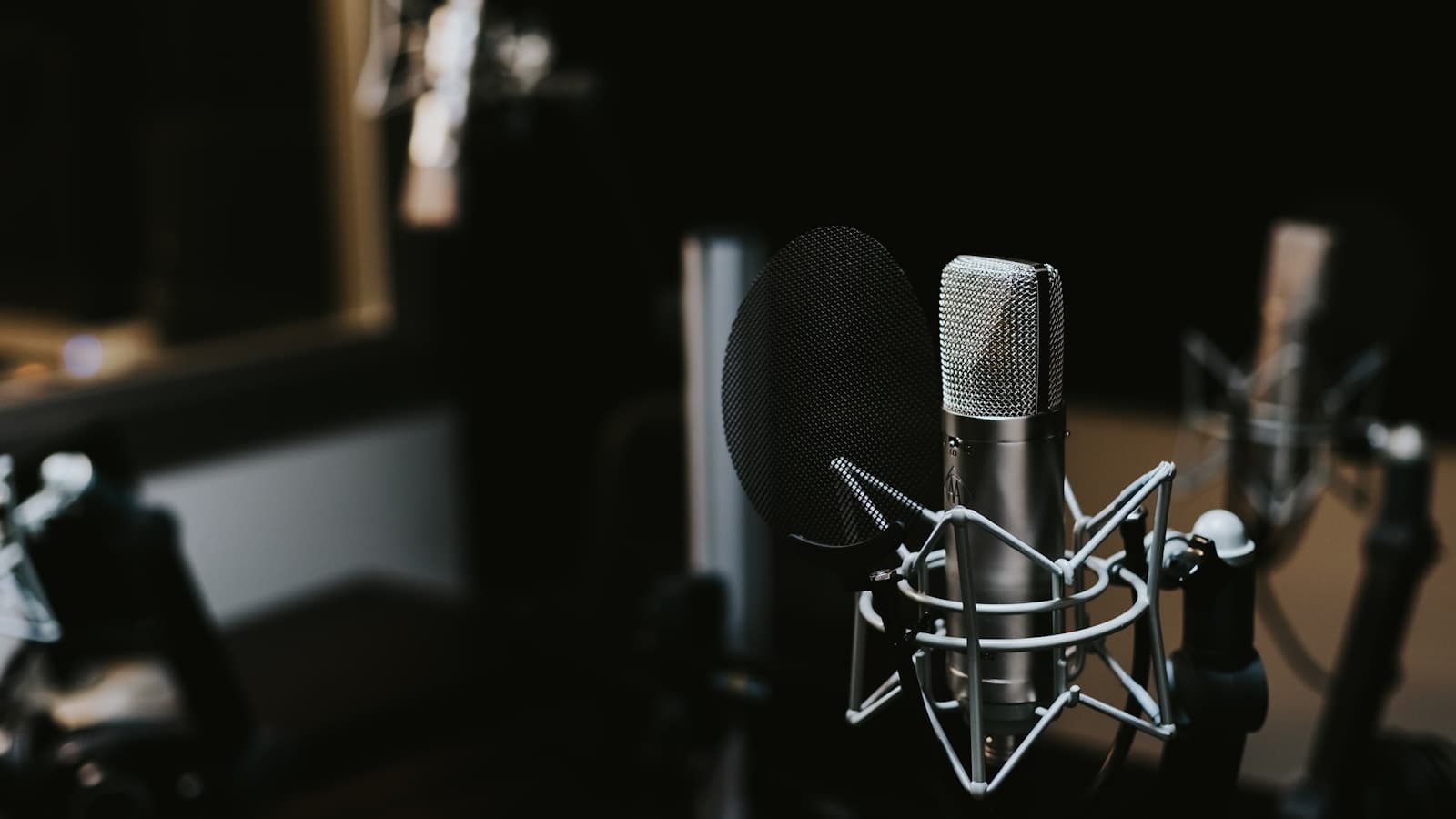
- A proper microphone. A USB mic like a Samson Q2U or an XLR dynamic like the Shure SM58 or SM7B. Never the laptop's built-in mic.
- A quiet, soft room. Soft furnishings absorb echo. A carpeted room with curtains and a sofa beats a hard-floored kitchen every time. A wardrobe full of clothes is a genuinely good makeshift booth.
- Headphones. Closed-back, so you can monitor your audio without it bleeding into the mic.
- Recording software. Free options like Audacity or GarageBand are fine to start; Riverside or Zencastr handle remote guests with separate tracks.
- A pop filter. A few pounds, and it kills the harsh 'p' and 'b' plosives that ruin otherwise clean audio.
recording tips for a clean, professional result
- Mic technique: stay a consistent fist's distance from the mic and speak across it, not directly into it.
- Record each person on a separate track. It makes editing dramatically easier — you can fix one voice without touching the others.
- Record a few seconds of silence at the start. That 'room tone' helps your editor clean up background noise.
- Clap at the start if you're recording audio and video separately — it gives you a sync point.
- Do a test and actually listen back. Thirty seconds now saves a ruined two-hour recording.
- Turn off notifications and fridges. Phones, laptops, air-con and appliances all creep into recordings.
video podcasts: the format that's taking over
The biggest shift in podcasting is video. YouTube is now one of the largest podcast platforms in the world, and clips cut for TikTok, Reels and Shorts are how most new listeners discover a show. If you're starting now, it's worth planning for video from day one — even if you release audio-only at first, having the footage means you can produce the short-form clips that actually drive growth. Recording video well at home is a real step up in difficulty, though: you need lighting, multiple camera angles, and a background that doesn't look like a spare room.
when it's worth using a proper studio
Home setups can sound good. What they can't easily do is look broadcast-quality on video, capture four guests cleanly, or deliver the multi-camera footage that professional video podcasts need. That's the point a purpose-built studio pays for itself. A proper podcast studio gives you four broadcast microphones, multi-camera capture, sound-treated walls and broadcast lighting — you walk in, sit down, and within ten minutes you're recording something that looks and sounds like it belongs in 2026, not a bedroom.
what a studio removes from your to-do list
- No room treatment to worry about — the walls are already acoustically tuned.
- No wrestling with mic stands and levels — it's set up when you arrive.
- Multiple cameras running and synced automatically, ready for a proper multi-angle edit.
- Stems and video files delivered same-day, so you can edit yourself or have the studio's editor do it.
- The credibility of a professional set, which matters more than people admit for guest bookings and sponsorship.
how to grow once you're recording
Consistency beats everything — a show that releases weekly for a year outperforms a better-produced show that gives up after six episodes. Batch-record several episodes in one session to stay ahead (a studio half-day comfortably captures three or four), cut short-form clips from every episode for social, and put real effort into your titles and thumbnails, which do more for discovery than most people realise. If you're recording video, a content day and a podcast day can often be combined into a single efficient studio visit — see our content creation studio for how that works.
recording your podcast with us
Our podcast studio in Tiptree, Essex is built for the modern video-podcast format — four Shure SM7B mics, a Rodecaster Pro II, multi-cam capture and broadcast lighting, from £100/hour. Podcasters travel to us from Colchester, Chelmsford, Ipswich and East London. See the podcast studio page for details, or book a session through the booking form.